


Compared with spherical lenses, the production process of aspheric lenses is more complicated due to the complex geometries, and different production technologies are suitable for different occasions.
Precision Glass Molding
Precision glass molding is a technique of heating the glass material to a high temperature until it becomes plastic, shaping it using an aspherical mold, and then cooling it down to room temperature. Precision glass molding is not appropriate for aspheric lenses with a diameter greater than 10mm. But new tools, new glass material, and metrology procedures are all pushing the technology forward. Although the cost of precision glass molding is high in the early stage of design (the building of high-precision molds), after the mold is formed, the incremental cost can even out the start-up costs. This technique is in particular suitable for occasions that require mass production.
Precision Polishing
Grinding and polishing are in general utilized for the occasion of producing a single aspheric lens at one time. The aspheres produced using precision polishing are often larger in size than those produced using glass molding. The precision polishing process is controlled by a computer, called CNC (computerized numerical control), with automatic adjustments to optimize parameters. If a higher quality finish is required, magneto-rheological finishing (MRF) will be used. MRF polishing offers higher performance and saves time compared with standard polishing. Precision polishing requires professional equipment and is the first choice for sample production and low-to-medium scale production.
Diamond Turning
This method involves using a diamond-tipped cutting tool to machine the lens material to the desired aspheric shape. Diamond turning allows for precise control of the lens surface, and the surface quality of the lens produced using this method is often higher than that produced using other production methods. Material options are much more limited with SPDT than with other techniques because glass cannot be shaped through diamond turning, whereas plastics, metal, and crystals can. SPDT can also be used in making metal molds utilized in glass and polymer molding.
Polymer Molding
Polymer molding is a technique of putting a spherical lens as the base, then die-casting on the surface of the spherical lens using an aspheric mold and utilizing ultraviolet light to cure the aspheric lens with a film of high-molecular-polymer. Polymer molding in general uses an achromatic spherical lens as the base, and a section of aspheric surface is die-cast on the surface to achieve simultaneous elimination of chromatic aberration and spherical aberration. Polymer molding is suitable for occasions requiring additional characteristics (elimination of chromatic and spherical aberration at the same time) and high-volume manufacturing.
Injection Molding
In addition to aspheric lenses made of glass, there are aspheric lenses made of plastic. Plastic molding is the technique of injecting molten plastic into an aspheric mold. Compared with glass, plastic has poor thermal stability and pressure resistance and needs special treatment to obtain similar aspheric lenses. However, the biggest characteristics of plastic aspheric lenses are low cost, lightweight, and easy molding. Injection molding is extensively hired in occasions with moderate optical quality, insensitive thermal stability, and low pressure resistance.
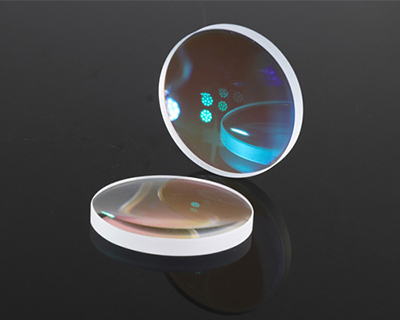
Figure 1. Aspheric Lenses from Shalom EO