

Basic Properties of LaBr3(Ce):
| Melting Point (ºC) | 1116 | Density (g/cm3) | 5.2 |
| Hygroscopic | Yes | Wavelength of Emission Max. (nm) | 380 |
| Refractive Index @ Emission Max. | 1.9 | Decay Time (ns) | 25 |
| Energy Resolution (%) | <3.5 | Light Yield (photons/MeV) | 63000 |
| Cleavage Plane | <100> | ||
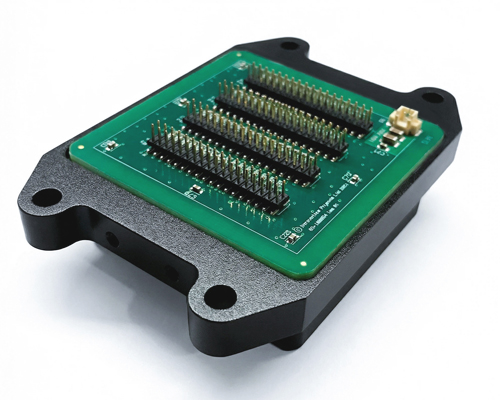
LaBr3(Ce) pixelated scintillation arrays consist of many cubic LaBr3 (lanthanum bromide) crystals arranged in linear or 2-dimensional metrics, and the optical reflectors in between the crystals. Cerium-doped Lanthanum bromide crystal, simplified as LaBr3(Ce), with high light output, exceptional energy resolution and fast decay time (typically 16-25ns) characteristic, have high potential for gamma spectrometer, and radiation imaging applications that require high time resolution, for example, medical imaging TOF - PET (Time of Flight-Positron Emission Tomography), an advanced PET imaging technique that improves image quality by measuring the difference in arrival times of two photons produced during positron annihilation.
This is how a LaBr3(Ce) pixelated array works: Each small crystal is defined as a "pixel". When a high-energy particle collides with the pixel, the LaBr3 crystal captures the particle and absorbs its energy, then the crystal is stimulated and emits fluorescence. Due to the optical reflectors, the light is mostly restricted to the pixel where the event occurred, and the downstream photodetector (such as silicon photodiodes) can distinguish which pixel generated the scintillation event, allowing the host computer to form a visual image.
Due to the strong deliquescent and hygroscopic nature of the Ce-doped LaBr3 crystal, manufacturing small-sized LaBr3(Ce) crystals, including producing LaBr3(Ce) scintillation arrays requiring a small pixel size, is practically challenging and technically demanding. Shalom EO is capable of producing minimum pixel size 1mm x 1mm LaBr3(Ce) scintillation arrays; other custom pixel sizes, pixel numbers, and reflector materials/thickness are available upon request.
The advantages of LaBr3(Ce) crystals:
1. High light-yield, around 63000 photons/MeV, twice that of NaI(Tl), and fast decay time, 16-25ns, supports TOF systems and fast-timing experiments in nuclear physics
2. Exceptional energy resolution, <3.5%, much superior to NaI(Tl), but the actual energy resolution of the crystal relates to the uniformity of the crystal grown
3. High stopping power, effective for detecting gamma rays
4. Room temperature operation is not required, compared to HPGe, it can operate at room temperature, resulting in a simpler and lower-cost system.
The application notes of LaBr3(Ce) arrays:
1. Avoid sudden temperature and humidity changes
Avoid prolonged exposure after opening, do not power on or disassemble in humid environments, and avoid rapid temperature changes that could cause internal condensation.
 Scintillation Arrays-500x400.jpg)
 Scintillation Arrays-50x40.jpg)
