

Introduction to Strontium Titanate (SrtiO3) Substrate
Product Introduction:
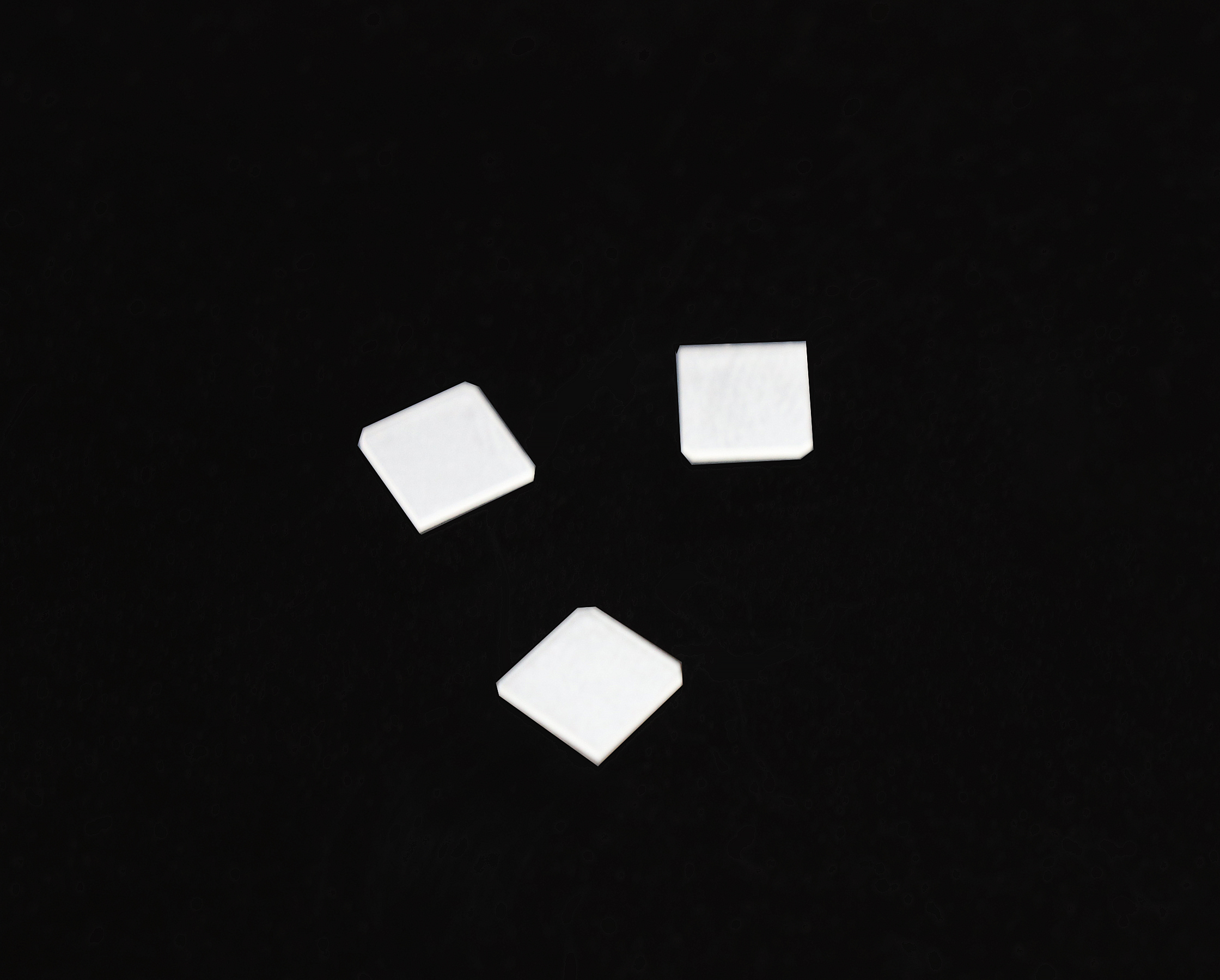
Strontium titanate crystal sheets are made from strontium titanate crystals. Strontium titanate (SrTiO₃) is a perovskite crystal with a cubic crystal system and exhibits excellent optical, electrical, and dielectric properties. This crystal has a high refractive index, a wide transmittance range, a high dielectric constant, and good thermal and chemical stability, making it an important functional crystal material.
Strontium titanate crystals are typically grown using either the float zone or Czochralski method. Using strontium carbonate and titanium dioxide as raw materials, a high-temperature solid-phase reaction synthesizes a polycrystalline material. Crystal growth is then performed under a controlled atmosphere, ultimately yielding high-quality, colorless, and transparent strontium titanate single crystals.
Physical and chemical properties of strontium titanate crystals |
|
Crystal name |
|
Crystal structure |
Cubic (perovskite structure) |
Lattice constant |
a = 0.3905 nm |
Melting point |
2080 ℃ |
density |
5.13 g/cm³ |
Mohs hardness |
6.5 mohs |
Spectral transmission wavelength range |
0.35–6.5 μm |
Refractive index (@600 nm) |
n ≈ 2.41 |
Dielectric constant (room temperature, 1 kHz) |
ε ≈ 310 |
Thermal conductivity |
12 W/(m·K) |
Coefficient of thermal expansion |
9.4 × 10⁻⁶ /K |
Working principle:
Strontium titanate crystals have an extremely high dielectric constant and low dielectric loss, making them excellent candidates for microwave devices, capacitors, and energy storage components. Their cubic perovskite structure remains stable over a wide temperature range, exhibiting excellent ferroelectric properties. They can be used to fabricate high-k dielectric layers, superconducting heterojunction substrates, optical lenses, and window materials. Their dielectric properties are highly responsive to changes in applied electric fields or temperature, making them suitable for high-frequency electronic devices and sensors.
Production process:
- Material synthesis: Using high-purity strontium carbonate and titanium dioxide as raw materials, strontium titanate polycrystalline material is synthesized through high-temperature solid-phase reaction.
- Crystal growth: Strontium titanate single crystals are grown in an oxidizing atmosphere using the Czochralski method or the float zone method.
- Cutting and rough grinding: Cut the crystal blank into predetermined sizes and perform preliminary grinding.
- Precision machining: Through milling, fine grinding and polishing processes, we ensure that the products achieve high-precision geometric dimensions and optical-grade surface quality.
- Surface treatment: The product is polished to keep the surface clean and free of coating. If there is special demand, coating treatment (such as anti-reflection film, reflective film, etc.) can be performed.
Application areas:
Optical window and lens materials
High-frequency dielectric components and capacitors
Superconducting thin films and electronic device substrates
Functional ceramics and piezoresistive elements
Tags: srtio3 crystal, strontium titanate substrate, srtio3 wafer