

Yttrium-stabilized zirconia crystal (YSZ)-Introduction
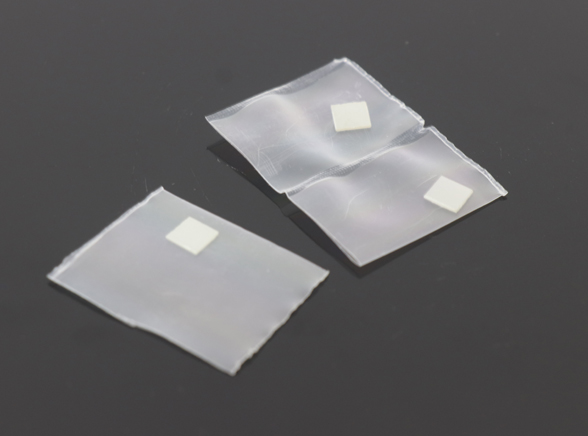
Product Name: Yttrium-stabilized zirconia crystal
Simplified chemical formula: YSZ (Molecular formula: ZrO2:Y2O3)
Material: Crystal material ( composition content : zirconium 26.07% , oxygen 22.92 % , yttrium 35.60 %)
1. Product Introduction
This product is yttrium-stabilized zirconia (YSZ) crystal , a high-performance crystalline material. By adding yttrium oxide to zirconium dioxide, the phase transition temperature range is altered, resulting in room-temperature stable YSZ cubic crystals. By incorporating yttrium oxide into the zirconium dioxide lattice, this solution successfully overcomes the volume change associated with the temperature-dependent monoclinic-tetragonal phase transition of pure zirconium dioxide. Yttrium-stabilized zirconia crystals are typically grown using high-temperature crystal growth techniques such as the Czochralski method.
Yttrium-stabilized zirconia crystals are known for their exceptional physical and chemical properties, including:
High thermal stability: Maintaining structural stability even at high temperatures. Yttrium-stabilized zirconia stabilizes its high-temperature cubic phase structure through yttrium ion doping, allowing the material to maintain a stable crystal structure from room temperature to 1400°C. The thermal expansion coefficient is reduced to 10.5×10⁻⁶/°C (20-1000°C), while the fracture toughness is as high as 6-12 MPa·m¹/², making it a model of both strength and toughness.
Excellent chemical inertness: Good corrosion resistance to a variety of chemicals.
High mechanical strength: good hardness and wear resistance.
Good ionic conductivity: Especially at high temperatures, it exhibits excellent oxygen ion conductivity.
High light transmittance: can be used in optical applications.
These properties make yttrium-stabilized zirconia crystals ideal for a variety of high-tech applications, especially those requiring high temperature, high strength and specific electrical properties.
2. Main characteristic parameters:
Crystal Name: Yttrium-Stabilized Zirconia Crystal
Crystal Structure: Cubic
Lattice Constant: a = 5.147 Å
Melting Point: 2700°C
Density: 6.0 g/cm³
Mohs Hardness: 8-8.5 mohs
Dielectric Constant: ε ≈ 27
Refractive Index: n = 2.15
Transmission Wavelength Range: 0.4 - 6.5 µm
Thermal Conductivity: 1.8 W/mK
Coefficient of Thermal Expansion: 9.4 × 10⁻⁶ /K
- Polishing: Single-side polishing (SSP) or double-side polishing (DSP) is available, with surface roughness (Ra) reaching nanometer levels. Highly flat and low-roughness surfaces are key to high-quality thin film epitaxial growth.
- Lattice constant: Approximately 5.147 Å. The lattice constant is an important parameter that measures the size of the crystal structure and has a direct impact on the lattice matching of the epitaxial film.
- Density: Approximately 6.0 g/cm3.
- Melting point: about 2700 °C.
- Hardness: Approximately 8-8.5 Mohs.
3. Working Principle
- 1. Thin Film Epitaxial Growth: Yttrium-stabilized zirconia crystals are an excellent and versatile substrate material for thin film epitaxial growth. Thin film epitaxial growth involves growing a specific single crystal layer with the same crystal orientation as the substrate on a single crystal substrate (substrate), essentially extending the original crystal. In practical applications, yttrium-stabilized zirconia crystals must be cut, ground, and polished before they can be used for thin film growth. The epitaxially grown single crystal layer can differ from the substrate in conductivity type and resistivity, allowing for the growth of multilayer single crystals of varying thicknesses and requirements, significantly enhancing device design flexibility and performance. YSZ's stable crystal structure, excellent lattice matching, and excellent high-temperature stability make it a key platform for growing superconducting thin films (such as YBa2Cu3O7-x, YBCO), ferroelectric thin films, magnetic thin films, semiconductor thin films (such as gallium nitride ), and other oxide thin films. These thin films have a wide range of applications in microelectronics, optoelectronics, sensors, and new energy devices.
4. Production process
yttrium-stabilized zirconia crystals mainly includes the following steps:
1) Raw Material Preparation: High-purity zirconium oxide and yttrium oxide powders are selected as raw materials and mixed in a precise stoichiometric ratio. The mixed raw materials are placed in a high-temperature crystal growth furnace. Using the Czochralski method or other suitable crystal growth methods, high-quality YSZ single crystal rods are slowly grown under precisely controlled temperature and atmosphere conditions.
2) Crystal cutting: The grown YSZ crystal rods are quality inspected and confirmed to be defect-free. Then, they are sliced using high-precision cutting equipment according to the required crystal orientation and size to obtain wafer blanks.
3) Grinding and polishing: The wafer blanks undergo multi-stage grinding and polishing to achieve strict thickness tolerances and nanometer-level surface roughness, ensuring that the substrate has excellent surface quality and optical properties.
4) Cleaning and testing: The finished substrates are ultrasonically cleaned to remove surface contaminants, and undergo strict size, crystal orientation, surface quality and defect testing to ensure that the products meet customer requirements.
5. Application Areas
Yttrium-stabilized zirconia crystals are widely used in the following high-tech fields due to their unique properties:
- Thin film growth substrate: An ideal substrate material for high-quality epitaxial thin films (such as superconducting films, ferroelectric films, magnetic films, etc.).
- Optical components: used to manufacture infrared windows, optical coatings, etc.
- High-temperature structural ceramics: used for structural components in extreme environments .
- Catalyst carrier: used as a carrier material in high temperature catalytic reactions.
- Denture materials
Tags: ysz crystal, yttrium stabilized zirconia, yttrium stabilized zirconia introduction