

LYSO:Ce Crystal Tutorial, Properties & Applications
Product Name: Cerium-doped yttrium lutetium silicate crystals
Simplified chemical formula: LYSO:Ce (Molecular formula: Lu2Y2S iO5:Ce)
Material: Crystal material (Composition content: Lutetium 54.9%, Yttrium 27.9%, Silicon 4.4%, Oxygen 12.6%, Cerium 0.2%)
Product images:
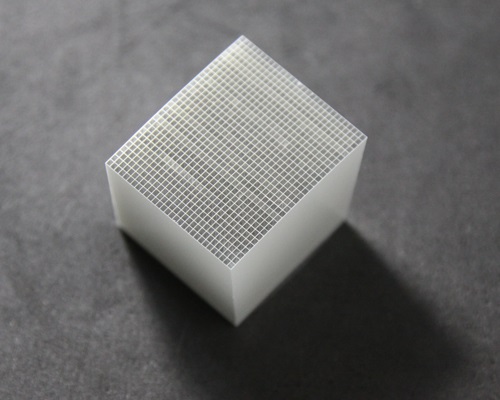
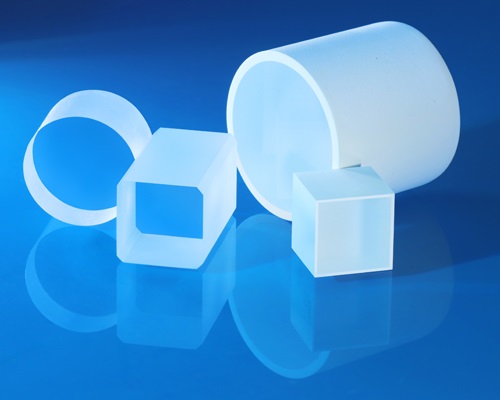
Product Introduction
This product is a single crystal scintillator of cerium-doped yttrium-lutetium silicate (LYSO:Ce). It is produced by chemically reacting and crystallizing cerium-doped high-purity lutetium oxide, yttrium oxide, and silicon dioxide in a high-temperature growth furnace, typically using the Czochralski method. This crystal produces strong fluorescence when exposed to high-energy radiation, such as X-rays, making it suitable for radiation detection.
Cerium-doped yttrium-lutetium silicate (LYSO:Ce) crystals feature high light yield, fast luminescence decay time, high density, and a high effective atomic number. They also possess stable physical and chemical properties, are non-deliquescent, and have excellent gamma-ray detection efficiency. They are an inorganic scintillating crystal material with outstanding overall performance. The crystals can be processed into square, round, strip, sheet, and array structures as needed.
The main applications of cerium-doped yttrium lutetium silicate (LYSO:Ce) crystals include nuclear medicine equipment such as PET-CT. They are also widely used in oil well exploration, safety inspection, environmental monitoring, industrial non-destructive testing, and high-energy physics research.
Working principle:
Cerium-doped yttrium lutetium silicate (LYSO:Ce) crystals produce fluorescence when irradiated by X-rays or gamma rays. The fluorescence intensity is proportional to the energy and intensity of the rays, and is therefore used in applications such as radiation detection and imaging.
In practical applications, the crystal is typically coated with a highly reflective material, such as ESR film, TiO2, or BaSO4, to improve fluorescence collection efficiency. The fluorescence is then directed outward through an uncoated window. The output light signal is collected by a photomultiplier tube (PMT) or silicon photodiode (Si-PD), where it undergoes photoelectric conversion and signal amplification, ultimately generating an electrical signal that can be used for analysis and imaging, and for signal processing.
When the crystal is processed into an array with an independent pixel structure, spatially resolved photon detection can be achieved. It is widely used in medical imaging equipment such as PET and SPECT, and industrial non-destructive testing equipment to achieve high-resolution imaging.
Production process:
- Material preparation: Raw materials such as cerium-doped lutetium oxide, yttrium oxide, and silicon dioxide are placed in a high-temperature growth furnace. Crystal growth is achieved through high-temperature chemical reactions (the Czochralski method is commonly used for crystal growth) to produce cerium-doped yttrium lutetium silicate (LYSO:Ce) scintillating crystal blanks.
- Preliminary processing: The crystal blank is quality inspected. After confirmation of qualification, the crystal is cut according to the design requirements to obtain the required shape and size.
- Precision machining: Milling, grinding, polishing and other precision machining processes are used to ensure that the crystals meet strict geometric tolerances and excellent optical surface quality.
- Surface treatment: The polished crystal surface is evenly coated with an aluminum reflective film or other reflective layer according to the design drawings to form a high-reflective layer. This layer is used to effectively collect the light signals generated by the scintillation and guide them to the designated output window for subsequent photoelectric conversion processing.
- The LYSO(Ce) array requires first making LYSO(Ce) into crystal bars according to the pixel size, polishing the end faces, and then assembling them into an array. The crystal bars are isolated by reflectors to prevent signal crosstalk.
Application areas:
This product is widely used in many fields, including PET equipment in nuclear medicine imaging, security equipment in public places, environmental monitoring systems, industrial non-destructive testing technology, and high-energy physics research.
Tags: LYSO Ce Crystal