

The Developments and Applications of Ultrafast Lasers
1. Limitations of Dye Lasers and the Rise of Solid-State Lasers
Femtosecond dye lasers use organic dyes (e.g., rhodamine 6G, coumarin) as the gain medium, and their broad fluorescence spectrum (typical bandwidth of 50-100 nm) supports wavelength tuning. For example, rhodamine 6G has a tuning range of 550-650 nm. The dye molecules are excited by the pump light and generate lasers by stimulated radiation with very short energy level lifetimes (~1-10 nanoseconds), making them suitable for generating femtosecond pulses. Continuous lasing is compressed into femtosecond pulses using passive mode-locking (e.g., saturable absorbers) or active mode-locking (acousto-optic modulators) techniques. Typical pulse widths for ultrafast dye lasers are 50-500 femtoseconds, with repetition frequencies up to 80-100 MHz. Dye lasers have a wide tuning range, but their dye solutions are highly susceptible to degradation, and they require complex fluidic control systems and cooling devices, which can have a serious impact on the stability and maintainability of the laser. In contrast, solid-state lasers, with their compact structure, low maintenance requirements, and high output stability, are becoming the core components of ultrafast laser systems.
Ti: Sapphire lasers, a new type of solid-state laser with titanium-doped sapphire crystals as the core medium, have become the key equipment in laboratories due to their strongest emission peak at 800 nm and wide tuning range (660 nm to 1.1 µm). The development of Ti:Sapphire is a key breakthrough in the field of solid-state ultrafast lasers. Since the introduction of the Kerr lens mode-locking technique in 1990, researchers have successfully achieved a pulse output of 60 fs or even shorter, and further compressed the pulse to less than 5 fs by chirped-pulse amplification to achieve high-power femtosecond pulsed laser output.
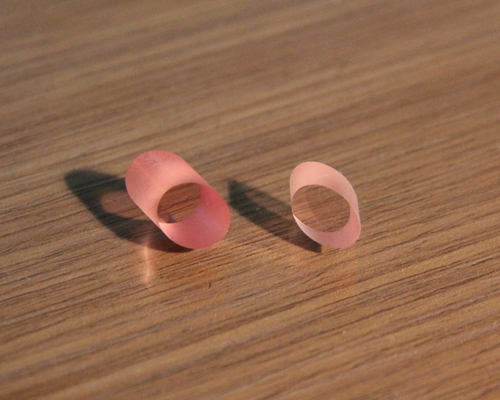
Figure 1. Shalom EO's Ti:Sapphire crystals
Fiber pulsed laser uses optical fiber as a laser medium, through the fiber matrix material doped with different rare earth ions, to obtain the corresponding wavelength of the laser output. The pump light generated by the pump source in the fiber core to form a high power density makes the doped rare-earth ion energy levels form a "particle number inversion"; the appropriate addition of a positive feedback loop to form a resonant cavity can produce laser light. In 1990, Chang's research group, using a highly doped active fiber laser and CPA technology, successfully developed a high-power ultrafast fiber laser. Mode-locked titanium crystal lasers integrated with CPA can generate ultra-high power pulses. In addition, strong single-cycle pulses have been generated by the titanium crystal laser system using an inflatable hollow-core fiber.
2. Chirped Pulse Amplification (CPA)
In amplifiers for ultrashort pulses, the peak intensity of the light becomes very high, and therefore, nonlinear pulse distortion of the pulse may be generated, which may even cause damage to the gain medium and other components. In this case, chirped pulse amplification (CPA) can be utilized to avoid the above problems. Originally invented in radar and later cited in optical amplifiers, the CPA technique proposed by Strickland and Mourou in 1985 enables pulse amplification without damaging the crystals by first spreading and then compressing. This breakthrough not only won the Nobel Prize in 2018 but also opened up a wide range of applications for high-intensity ultrafast lasers in fields such as materials processing and precision measurement. Before passing through the amplifier medium, the pulse is chirped using strongly dispersive elements (pulse stretcher, e.g., gratings, long fibers) and thus stretched in time to a longer pulse width, which reduces the peak power of the pulse, and thus the problems mentioned above are avoided. After amplification, the dispersion is compensated for, and the pulse width is compressed using a pulse compressor that has the opposite dispersion of the previous spreader. Since the peak power at the compressor is very high, it is also necessary to increase the beam diameter at the compressor. For devices with very high peak power, beam diameters of 1 m or more are typically required.
The chirped-pulse amplification approach allows benchtop amplifiers to produce femtosecond pulses of mJ energy, with corresponding peak powers of several TW (1 TW = 1012W, equivalent to the output of 1000 large nuclear power plants). For generating higher power ultrashort pulses, the amplifier system usually consists of several regenerative amplifiers and multiple-pass amplifiers, most of which are based on titanium sapphire crystals. Such amplifiers can be used for high harmonic generation, and their peak power is even as high as the peak power of a PW (1 PW = 1000 TW = 1015 W).
The concept of chirped pulse amplification also applies to fiber optic amplifiers. Due to the high nonlinearity of long optical fibers, CPA can only be realized at relatively low pulse energies, which are still limited to about 10 mJ even with very effective stretchers; however, the average power can be as high as a few tens of watts or even greater than 100 W. Therefore, CPA systems based on optical fibers are much more suitable for chirped pulse amplification. Thus, fiber-based CPA systems are more suitable for high average power at high pulse repetition rates. The fiber in such a system should have the following characteristics: high gain per unit length, bias preserving (strong birefringence), etc. All-fiber CPA systems are also possible, but their pulse energy is severely limited. Therefore, the compressor is also usually composed of space optics.
3. Advantages and Applications of Ultrafast Lasers
Ultrafast lasers offer the following unique advantages in the field of micro-processing and nanofabrication:
- Extremely high peak power, which triggers a nonlinear absorption mechanism;
- Ultra-short pulse durations, resulting in an almost negligible heat-affected zone;
- Extremely small feature processing dimensions for sub-micron precision processing of materials such as glass, ceramics, and polymers.
- Compared to traditional laser or mechanical processing methods, ultra-fast lasers can realize "cold processing" without thermal damage, avoiding the formation of micro-cracks and recast layers, and greatly improving processing accuracy and consistency. Research has shown that the quality of laser cutting is highly dependent on the pulse width. When the pulse width exceeds 1 nanosecond, the cutting quality will be affected due to thermal melting and redeposition of the molten layer. It is therefore crucial to utilize ultrafast lasers for high-quality cutting and to take full advantage of the minimal thermal effects associated with ultrafast processing.
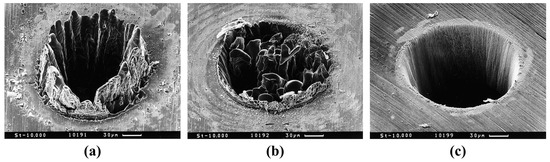
Figure 2. The pictures show different degrees of smoothness of the drilling holes when lasers of different pulse durations are used
Femtosecond laser direct writing is a type of micro- and nanostructure processing using ultrashort pulsed lasers. Through computer-controlled high-precision laser beam scanning, the substrate resist material is processed using variable-dose exposure technology, and a predetermined three-dimensional relief contour is formed after development. The ultra-short pulse characteristic of a femtosecond laser can reduce the thermal diffusion effect and realize sub-micron processing precision. The technique has a wide range of applications in the fields of photonic crystals, artificial metamaterials, optical micro-nano devices, micro-mechanical devices, microfluidic structures, and biological devices.
Optical imaging: Ultrafast lasers can be used to realize ultrahigh-speed imaging. By utilizing ultrashort pulsed lasers for imaging, transient images of objects can be captured, providing new means and methods for scientific research and technological innovation.
Spectroscopy: A Laser spectral analyzer is an analytical instrument applied in the field of chemical engineering, analyzing the molecular structure, crystal structure, structural phase transition, stress, etc. of materials through Raman spectroscopy.
4. The evolution of industrialization of femtosecond lasers
With the development of femtosecond fiber lasers, diode pumping technology, and MOPA systems, ultrafast laser systems in terms of volume, cost, and stability have achieved breakthroughs. For example:
- Single-cycle pulse output achieved using hollow-core fiber;
- High average power fiber CPA systems incorporating large mode area photonic crystal fibers;
- For glass internal modification, 3D nanoprinting, and other new applications of additive manufacturing.
At present, femtosecond lasers are widely used in:
- Microscopic imaging and optical slicing
- Laser direct writing and photonic device manufacturing
- Precision micro-welding and glass internal drilling
- Biomedical processing
- Remote sensing
- semiconductor device micromachining
With the combination of ultrafast laser technology with integrated optics, AI vision inspection, and other new technologies, its applications in industry, scientific research, and medical fields will become more diversified and deeply integrated.
Conclusion:
From the elimination of dye lasers to the rise of solid-state ultrafast lasers to the industrialization of femtosecond processing technology, the development of ultrafast optics is reshaping the modern manufacturing landscape. Shalm EO offesr a wide range of ultrafast optics, including Ti: Sapphire crystals as laser gain media, BBO, LBO crystals for nonlinear harmonic generation, chirped mirrors for pulse compression and dispersion compensation, as well as high reflective low GDD femtoline mirrors (enhanced silver mirror or dielectric mirror), ultrafast harmonic separators, ultrafast thin film polarizers, ultrafast thin lenses, and windows.
you might also be interested in:
Instant Guide-Important Specifications for Ultrafast Optics
The Physics of Ultrafast Lasers
Related Articles
Tags: The Developments and Applications of Ultrafast Lasers